
TPO Roofing Contractor in Colorado
TPO roof repair, replacement, restoration, and inspections for commercial properties across Colorado.
You're in the Right Place
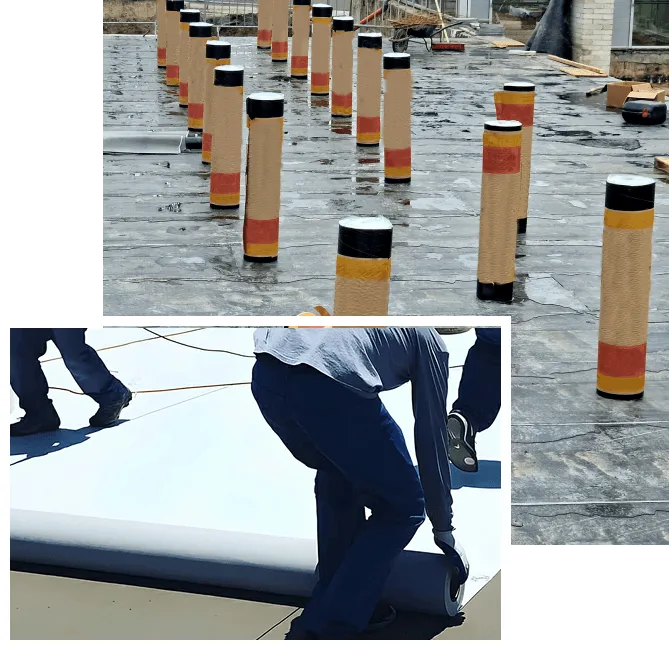
If you manage or own a commercial property in Colorado and you’re researching TPO roofing, Statewide Roofing is a contractor you can trust to give you a straight answer. We’ve installed, repaired, and replaced TPO roofing systems across the Front Range — on warehouses, office buildings, retail centers, schools, and everything in between.
We’re not going to oversell you on a new roof if your existing system can be repaired. And we’re not going to keep patching a roof that has genuinely reached the end of its useful life. What we will do is evaluate what’s actually on your building, tell you what we find, and help you decide what makes sense given your budget, your timeline, and how long you plan to own the property.
If you have a TPO roof that’s leaking, aging, or coming up for review — we’re the right call.
What Is TPO Roofing?
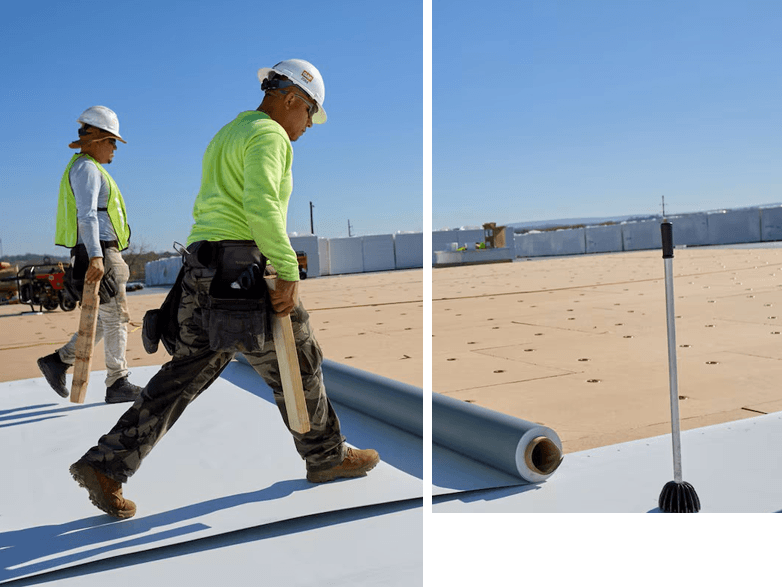
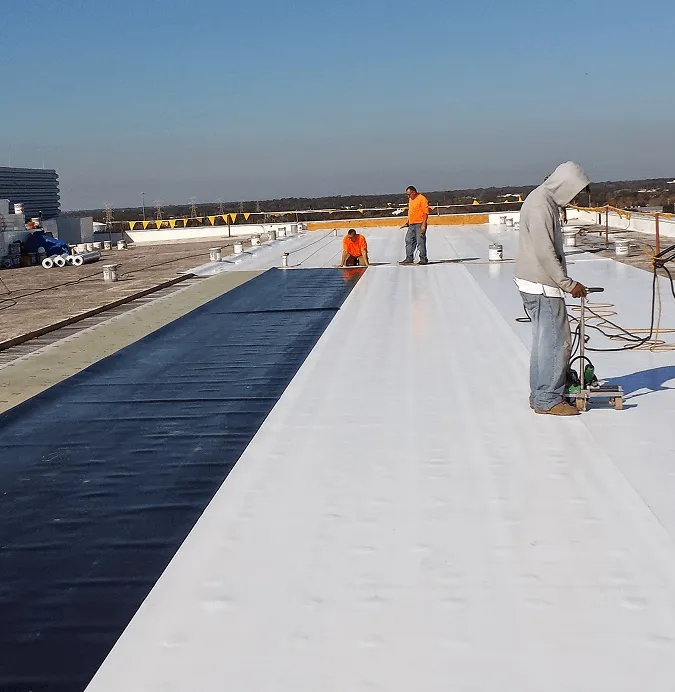
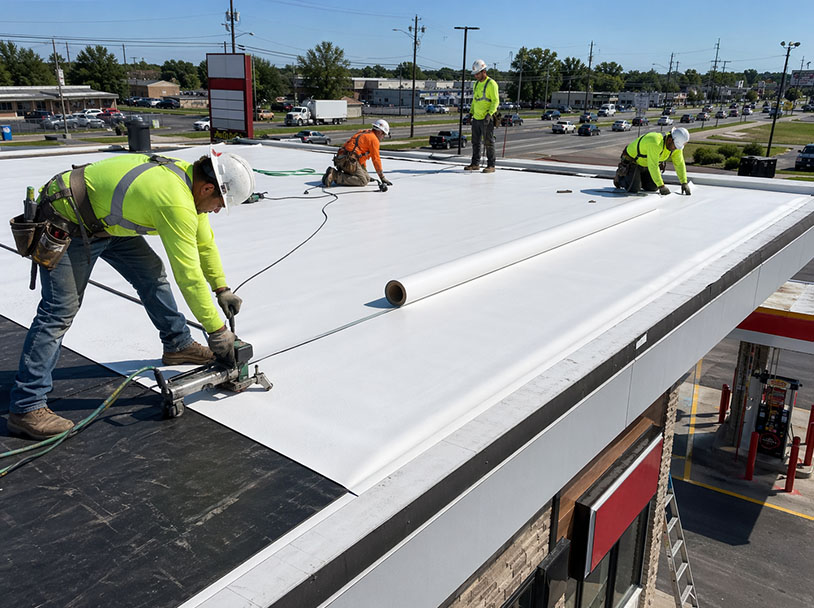
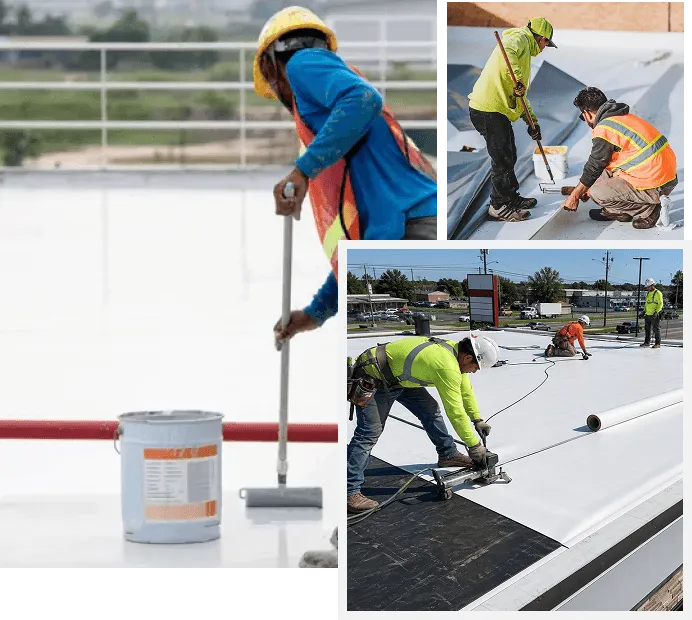
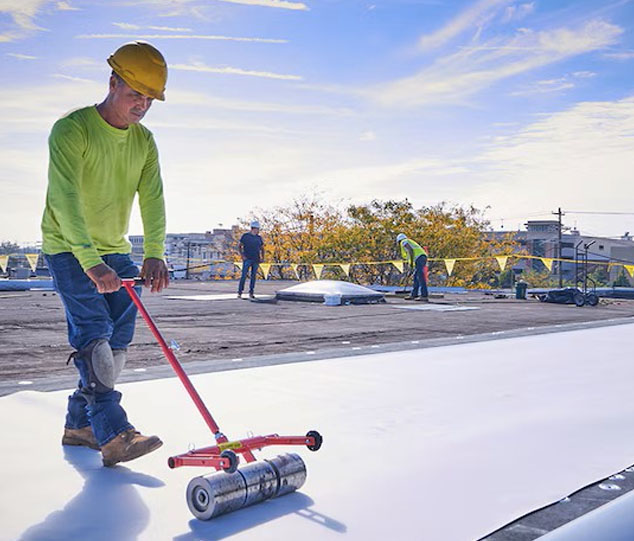
Thermoplastic polyolefin (TPO) is a single-ply roofing membrane widely used on commercial and industrial buildings with low-slope roof systems. It is manufactured in rolls, typically 10 to 20 feet wide, and is installed in three primary ways: mechanically fastened to the roof deck, fully adhered with bonding adhesive, or ballasted with aggregate. Seams between membrane sheets are heat-welded using hot-air welding equipment, which fuses the material together and creates a continuous, watertight bond when executed correctly.
TPO membranes are available in several thicknesses — most commonly 45-mil, 60-mil, and 80-mil — with heavier membranes offering greater puncture resistance and weld durability. The membrane surface is highly reflective, typically white or light gray, which contributes to reduced rooftop heat gain and is a factor in energy code compliance in many commercial applications.
Why TPO Is One of the Most Common Commercial Roofing Systems
TPO became one of the dominant single-ply roofing membranes in commercial construction over the past two decades for several practical reasons. It combines the heat-welded seam technology associated with PVC roofing with a lower cost profile. It is lightweight relative to built-up or modified bitumen systems. It is compatible with a wide range of insulation types and roof deck configurations. And its white reflective surface aligns with energy efficiency goals that matter to many commercial building owners and code jurisdictions.
TPO is also a flexible system in terms of application. It can be installed over existing insulation in reroof scenarios, used in new construction, and adapted to roofs with complex geometry, multiple penetrations, and varying drain configurations. That versatility makes it a frequent specification on everything from single-tenant industrial buildings to multi-building commercial campuses.
What Determines TPO Roofing Performance
The membrane itself is only one factor. TPO roofing performance over time depends heavily on the quality of the installation and the integrity of every component in the assembly.
Seam quality
Seam quality is the most critical variable. Heat-welded seams that are properly executed create joints that are often stronger than the membrane field itself. Seams that are underwelded, contaminated, or rushed are the most common source of TPO roof failures and leaks.
Flashing details
Flashing details at parapets, curbs, penetrations, rooftop units, and drains determine whether water is managed correctly at every transition. These are the locations where most leaks originate — not in the open field of the membrane.
Insulation and substrate
Insulation and substrate affect long-term performance significantly. Wet or degraded insulation beneath the membrane changes how the system responds to thermal movement, fastener loads, and ponding water.
Drainage design and execution
Drainage design and execution determines whether the roof sheds water effectively. Low-slope roofs that pond water for extended periods accelerate membrane wear, stress seams, and create recurring maintenance issues.
Fastener patterns and edge securement
Fastener patterns and edge securement affect how the system performs under wind uplift. Roofs in Colorado's climate contend with significant wind events, and edge and corner zones require specific fastening details to perform within design parameters.
What We Evaluate on Every TPO Roof
- Open, stressed, or underwelded seams
- Flashing conditions at curbs, parapets, and all penetrations
- Ponding water, drain performance, and slope adequacy
- Membrane shrinkage, field punctures, and traffic wear
- Conditions around HVAC units, curbs, and service pathways
- Fastener pattern integrity, edge metal, and termination details
- Insulation condition where moisture intrusion is suspected
TPO Repair vs. Restoration vs. Replacement
Not every TPO problem requires a full replacement, and not every TPO roof is worth continuing to repair. The right answer depends on the scope and location of failures, the condition of the underlying assembly, and the owner’s objectives for the property.
Repair
Repair is appropriate when issues are isolated — a failed seam section, flashing that has separated, a puncture, or a penetration detail that was never finished correctly. When the membrane field is generally sound and moisture hasn't affected underlying components, targeted repairs can extend service life significantly at a fraction of replacement cost.
Restoration
Restoration using a fluid-applied coating system may be a viable option for TPO roofs with broad surface weathering, minor seam fatigue, or reflectivity loss. Certain coating products are formulated for adhesion to TPO membranes and can add years of service life while improving the reflective surface. This is most appropriate when the membrane is still structurally intact and there is no widespread moisture intrusion below.
Replacement
Replacement becomes the practical choice when recurring leaks are spread across multiple areas, the insulation has sustained moisture damage, seam and flashing failures are systemic, or the membrane has reached the end of its expected service life. Continuing to repair a roof in this condition produces diminishing returns and carries real risk of interior damage and escalating costs.
Where TPO Roofing Is Commonly Specified
- Warehouses and distribution facilities
- Retail centers, strip centers, and big-box buildings
- Office buildings and professional parks
- Schools, universities, and institutional properties
- Medical and healthcare facilities
- Industrial and manufacturing buildings
- Multi-family and mixed-use properties with low-slope roof sections
Frequently Asked Questions
A properly installed and maintained TPO roof typically performs for 20 to 30 years, depending on membrane thickness, climate exposure, rooftop traffic, and the quality of original installation. Heavier membranes in the 60-mil and 80-mil range generally outperform 45-mil systems in demanding applications.
Yes. Many TPO leaks can be repaired when the membrane is still serviceable. The correct repair method depends on seam condition, flashing details, punctures, and moisture below the membrane.
TPO is a thermoplastic white membrane with heat-welded seams. EPDM is a synthetic rubber membrane commonly available in black and installed with taped or adhesive seams.
Common issues include seam separation, punctures, UV exposure, aging flashings, drainage problems, rooftop traffic damage, and previous repairs that were not properly welded.