
Spray Foam Roofing Contractor in Colorado
Spray foam roofing repair, replacement, restoration, and inspections for commercial properties across Colorado.
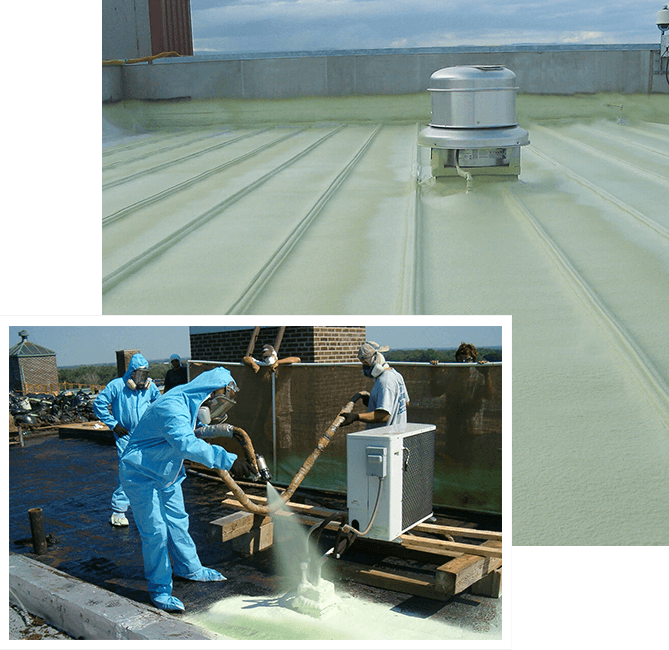
Seamless Roofing and Insulation for Low-Slope Commercial Roofs
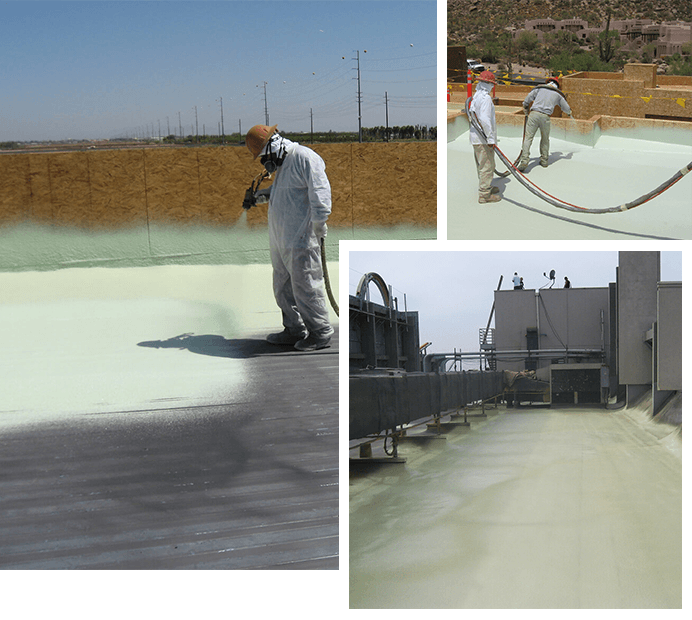
Spray polyurethane foam, or SPF, is a fluid-applied roofing system used on low-slope commercial roofs. Once applied, it expands into a continuous layer of closed-cell foam and is then protected with a coating system designed to shield it from weather and UV exposure. SPF is known for being seamless, self-flashing, and highly effective at covering irregular roof shapes, penetrations, curbs, and transitions.
At Statewide Roofing, we view spray foam roofing as a specialized solution. In the right situation, it can be an excellent option for restoring an existing roof, improving insulation value, and simplifying difficult roof details. On the wrong building, or in the wrong conditions, another roofing system may be the better long-term choice. That kind of project-by-project judgment is important with SPF. This conclusion is based on the way manufacturers and SPF specialists describe the system’s benefits and constraints rather than on any single source saying “small roofs only.”
What Is Spray Foam Roofing?
Spray foam roofing is made by applying liquid polyurethane foam directly onto a prepared roof surface. The material expands rapidly, creating a monolithic foam layer that can add insulation, help improve drainage with tapered application, and eliminate many of the seams and mechanical fasteners that often become leak points in other roof systems. Because the foam itself is vulnerable to ultraviolet light, it must be protected with a compatible elastomeric coating.
Where Spray Foam Roofing Makes Sense
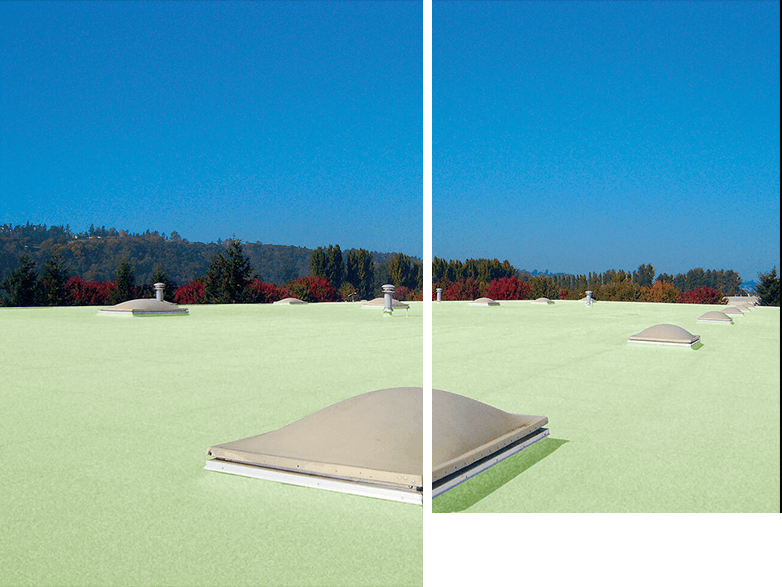
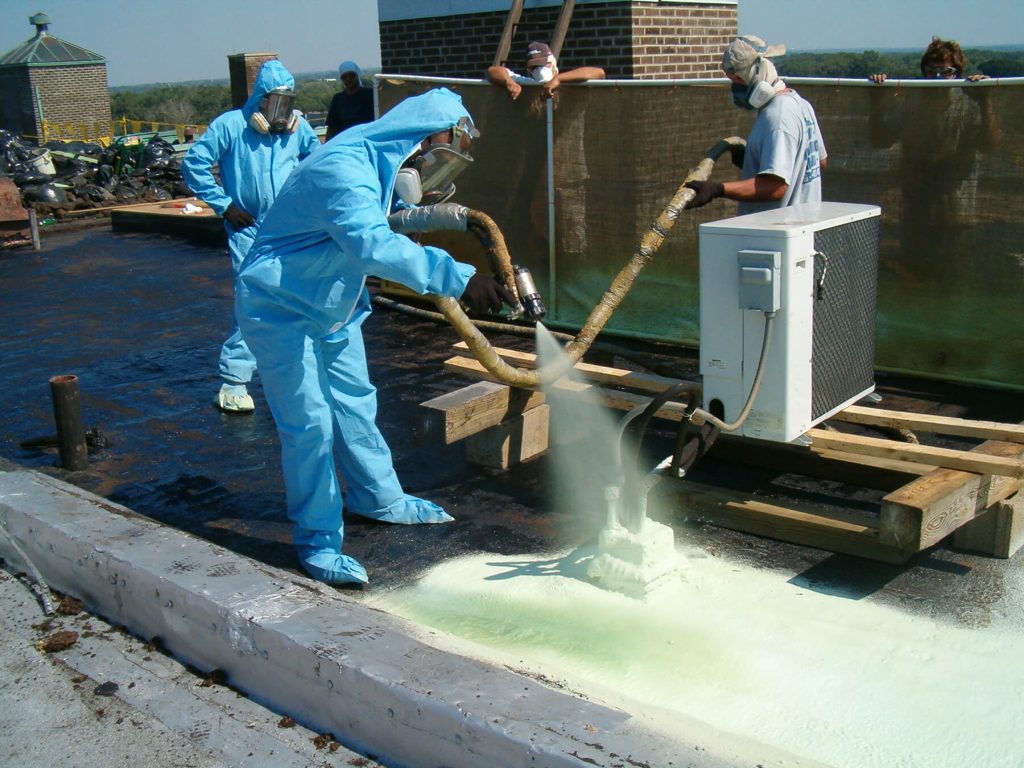
SPF is often attractive on buildings where the existing roof may be a candidate for restoration rather than a full tear-off, and on roofs with many penetrations, curbs, transitions, or irregular details. It is also commonly used over certain existing roof systems, including some metal roofs and other low-slope assemblies, when the substrate is sound and properly prepared. These are some of the situations where SPF’s self-flashing, seamless nature, and ability to conform to the roof can be especially valuable.
In practical terms, SPF can be a smart option for:
- smaller or more complex low-slope roofs
- roofs with many penetrations and detail work
- some restoration projects where tear-off may be avoidable
- some metal roofs where covering seams and fasteners is a major goal
Those use cases are grounded in the system’s documented strengths: it is seamless, self-flashing, can go around penetrations more easily than sheet membranes, and may be used in retrofit work over eligible existing roofs.
When Spray Foam May Not Be the Best Fit
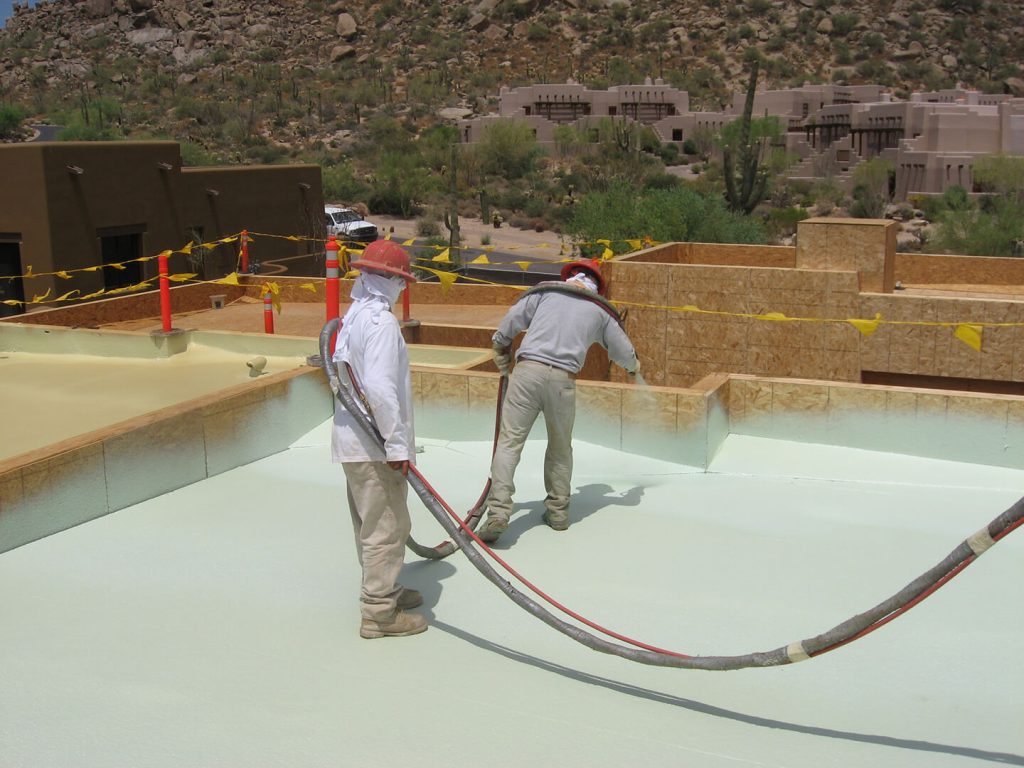
Spray foam roofing also has limits. Installation conditions matter. Multiple sources note that SPF has a narrower application window than some other systems because temperature, humidity, surface dryness, and weather all affect installation quality. Uncoated foam also degrades in UV exposure, which is why the protective coating is essential. Overspray is another real consideration, especially near cars, neighboring buildings, equipment, sensitive surfaces, or areas where wind control is difficult.
Because of that, very large open roofs are not automatically bad candidates for SPF, but they do require the right site conditions, experienced applicators, and careful project control. In some large-roof situations, especially where overspray risk, weather exposure, or logistics are challenging, a membrane system or another roofing approach may be more practical. That is an inference based on the documented overspray and application constraints, not a universal rule against SPF on large roofs.
Performance Advantages of SPF Roofing
When properly installed in the right setting, spray foam roofing offers several important advantages:
- Seamless application with no field seams to split or separate
- Self-flashing performance around curbs, penetrations, and irregular roof details
- Added insulation value as part of the roof assembly
- Potential to avoid tear-off on some eligible reroof projects
- Coating renewability, which can extend service life when the roof is maintained and recoated as needed
These are among the most consistently cited reasons building owners choose SPF.
Why Work With Statewide Roofing
At Statewide Roofing, we approach spray foam roofing carefully and honestly. We understand where SPF can be a strong solution and where another system may be the better call. If your building may be a candidate for spray foam roofing, we can evaluate the existing roof, the building layout, nearby surroundings, insulation goals, and long-term maintenance needs before recommending a path forward.
Our goal is not to force one system onto every project. It is to recommend the roofing solution that makes the most sense for the building.
Frequently Asked Questions
Spray foam roofing, or SPF roofing, is a low-slope commercial roofing system made by spraying liquid polyurethane foam onto a prepared substrate and then protecting it with a coating. The result is a seamless, insulated, self-flashing roof surface.
Often, SPF is especially attractive on restoration projects, roofs with many penetrations, and buildings where avoiding tear-off or adding insulation is a priority. Very large roofs can still be candidates, but overspray control, weather conditions, and jobsite logistics become more important. In some cases, another roofing system may be more practical.
In many cases, yes, SPF can be installed over an eligible existing low-slope roof if the substrate is dry, sound, and properly prepared. That is one reason it is often considered for reroof and restoration work.
The main concerns are overspray risk, weather-sensitive installation conditions, the need for proper coating protection, and the importance of experienced installation. SPF can perform very well, but it is not the right fit for every building or every jobsite.