Roof Coatings Contractor in Colorado
Roof coatings repair, replacement, restoration, and inspections for commercial properties across Colorado.
You're in the Right Place
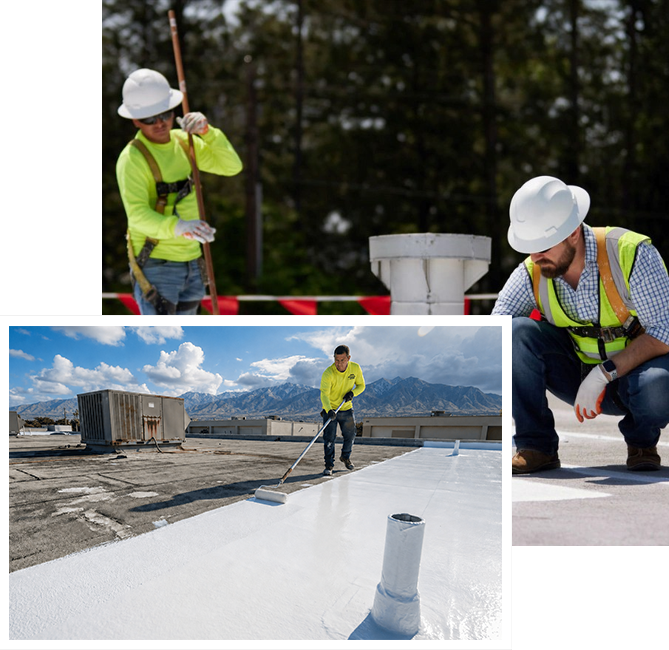
If you manage or own a commercial property in Colorado and you’re trying to figure out whether a roof coating makes sense — or whether someone is trying to sell you one when it won’t actually solve the problem — Statewide Roofing can give you a straight answer.
We’ve applied fluid-applied coating systems on commercial roofs across the Front Range, and we’ve also walked away from projects where a coating wasn’t the right call. That’s not a sales pitch. It’s how we work. A coating is a legitimate, cost-effective solution on the right roof. On the wrong roof, it’s money spent deferring a problem that’s going to get worse.
If your roof is aging, showing surface wear, or you’ve been told it might be a coating candidate — we’ll evaluate it honestly and tell you what we find.
What Is a Roof Coating?
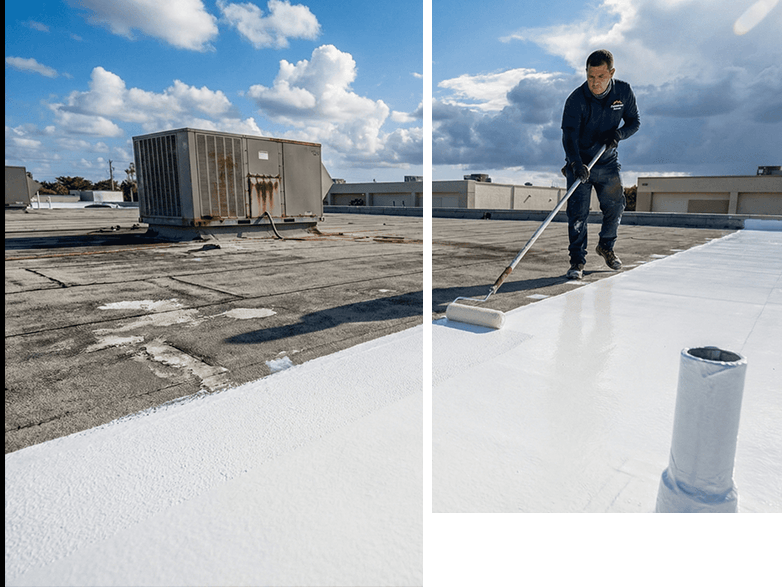
A roof coating is a fluid-applied, monolithic membrane installed directly over an existing roofing system. Unlike a traditional re-roofing project, a coating does not involve removing the existing membrane. Instead, it is applied in liquid form — by spray, roller, or brush depending on product type and roof geometry — and cures into a seamless, fully adhered surface layer that bonds to the substrate beneath it.
Roof coatings are not a single product category. The most common types used on commercial buildings include:
Silicone coatings
Silicone coatings — highly resistant to ponding water and UV degradation, with excellent flexibility across temperature ranges. Widely used on membrane roofs and metal roofs where water pooling is a factor.
Acrylic coatings
Acrylic coatings — water-based, highly reflective, and cost-effective in climates where ponding water is not a persistent issue. Performance can degrade when exposed to standing water for extended periods.
Polyurethane coatings
Polyurethane coatings — available in aromatic and aliphatic formulations. Aromatic urethanes are typically used as base coats for impact and puncture resistance. Aliphatic urethanes offer superior UV stability and are often used as topcoats on high-traffic or high-visibility roofs.
Butyl and hybrid systems
Butyl and hybrid systems — used in specific applications where elongation, adhesion to aged substrates, or compatibility with existing membranes is a priority.
Each product type has a specific performance profile, and the right choice depends on the existing roof system, climate exposure, ponding water conditions, and what the coating is being asked to do.
What We Evaluate Before Recommending a Coating
- Overall membrane and surface condition across the full roof area
- Active leaks and confirmed leak origin points
- Seam, flashing, and penetration integrity
- Ponding water locations and drainage performance
- Substrate and insulation condition, including moisture scan or core sampling where warranted
- Compatibility between existing roof system and candidate coating products
- Whether restoration cost and service life extension align with the owner's budget and ownership timeline
When a Roof Coating Makes Sense
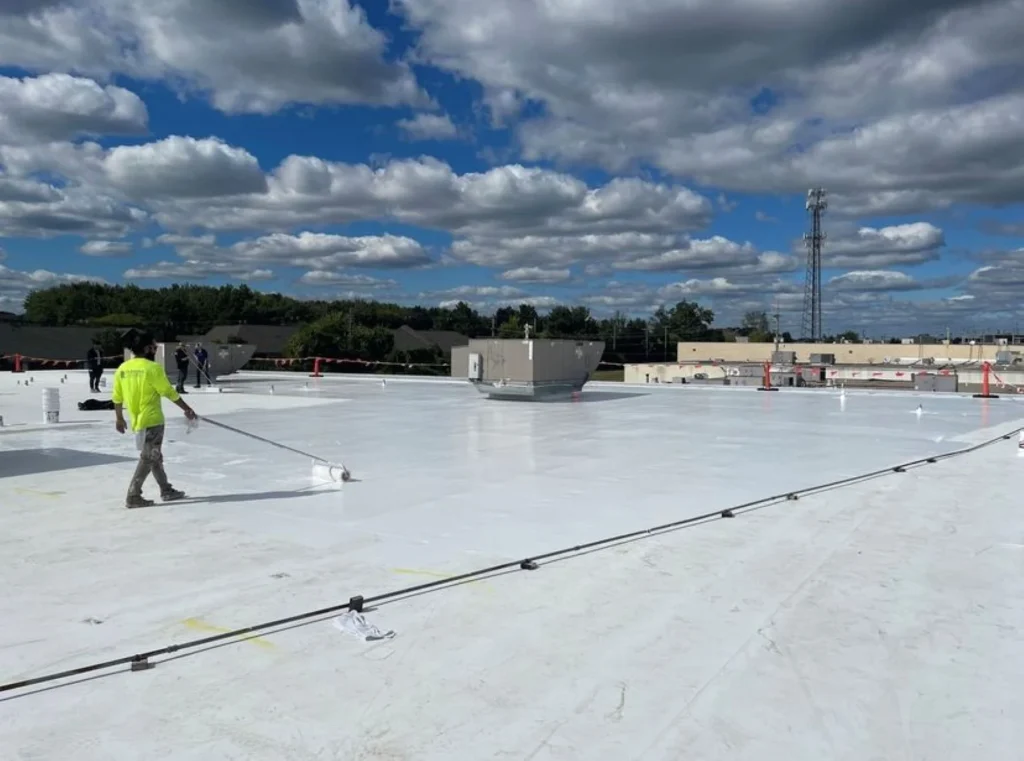
A coating is most appropriate when the existing roof assembly is still fundamentally sound — meaning the substrate is dry, the structure is stable, and the primary issues are surface weathering, reflectivity loss, minor seam fatigue, or manageable detail repairs. In those conditions, a properly prepared and applied coating system can meaningfully extend service life, restore reflective performance, and reduce the cost of ongoing maintenance.
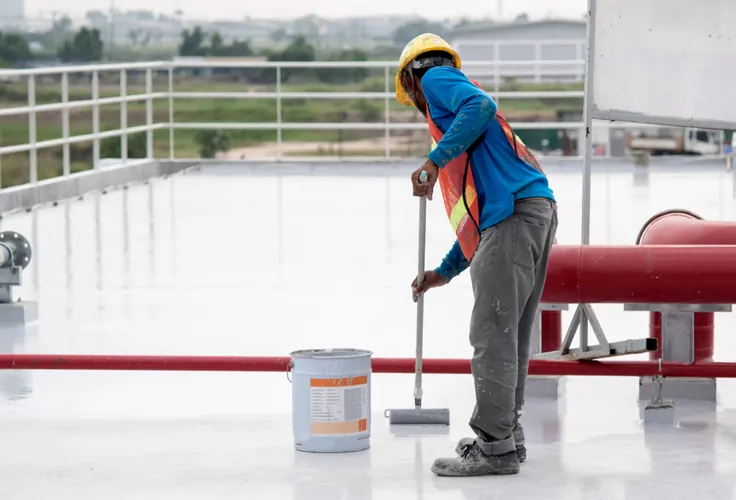
Common scenarios where coating is a legitimate strategy:
- A single-ply membrane roof that is surface-weathered but has no significant moisture intrusion below the membrane
- A metal roof with rust, minor panel lap leaks, or failing sealant at fasteners and seams — but with intact panels and no structural compromise
- A modified bitumen or built-up roof system with surface oxidation and minor blistering, where the insulation and deck are still in serviceable condition
- A building owner with a defined ownership horizon who needs to extend roof life by 10 to 15 years without the capital outlay of full replacement
A coating is not a repair in disguise. Active leaks, failed flashings, and compromised seams must be properly addressed before any coating is applied. The coating protects and extends what is already working — it does not fix what is broken.
When a Coating Is Not the Right Answer
This is where honest evaluation matters most. Not every aging commercial roof is a coating candidate, and recommending a coating on the wrong roof does real harm to the building owner.
Coating is generally not the appropriate solution when:
- Moisture has infiltrated the insulation or roof deck. Fluid-applied coatings applied over wet or saturated assemblies trap moisture, accelerate deterioration, and create conditions that lead to structural damage and mold.
- Seam, flashing, or penetration failures are widespread. A coating cannot bridge systemic detail failures. Surface application over failed terminations and transitions will not hold.
- The membrane has reached the end of its service life with broad adhesion failure, extensive cracking, or loss of structural integrity. Coating over a membrane in this condition produces short-term results at the cost of deferring an inevitable replacement.
- Drainage problems are significant and unresolved. Coatings applied to roofs with persistent ponding may perform well initially but will degrade faster than expected without correcting the underlying drainage conditions.
We do core cuts, moisture scans, and thorough detail inspections before recommending coating on any project. If the roof isn’t a good candidate, we’ll tell you — and explain what the better path forward looks like.
The Prep Work Is the Project
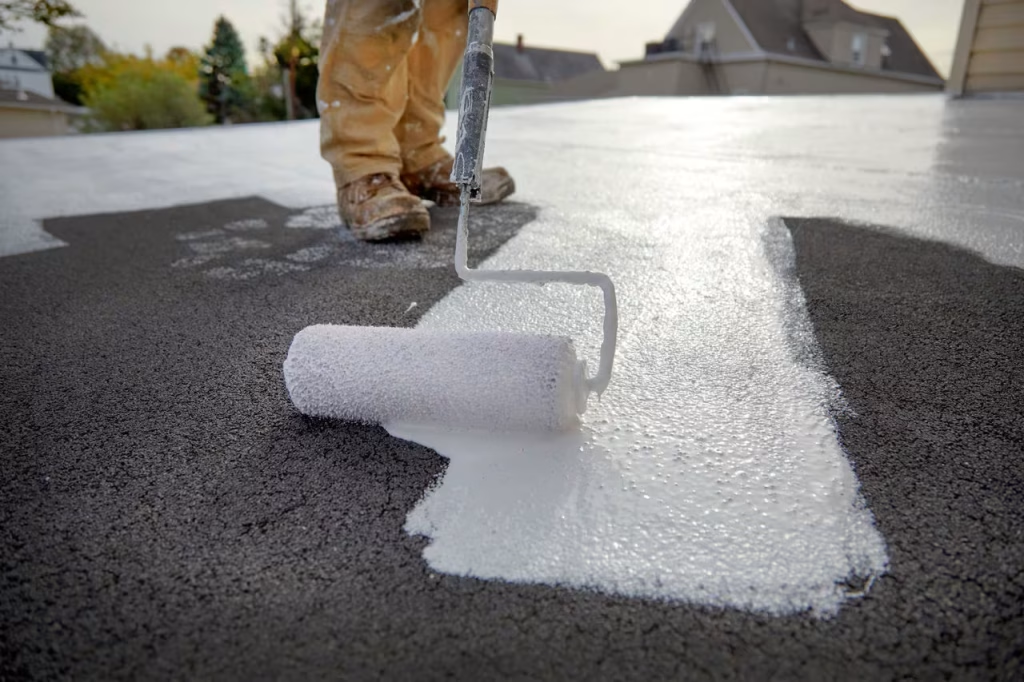
The most important work on a coating project happens before the first gallon is applied. Surface cleaning, priming, seam reinforcement, flashing repairs, penetration detailing, and transition work determine whether the coating performs as designed or fails prematurely.
A coating is only as durable as what’s beneath it and what’s done to prepare it. This is where corners get cut on projects that don’t deliver, and where the difference between contractors shows up clearly. We treat prep as the core of the project — not an afterthought.
Roof Types That Are Common Coating Candidates
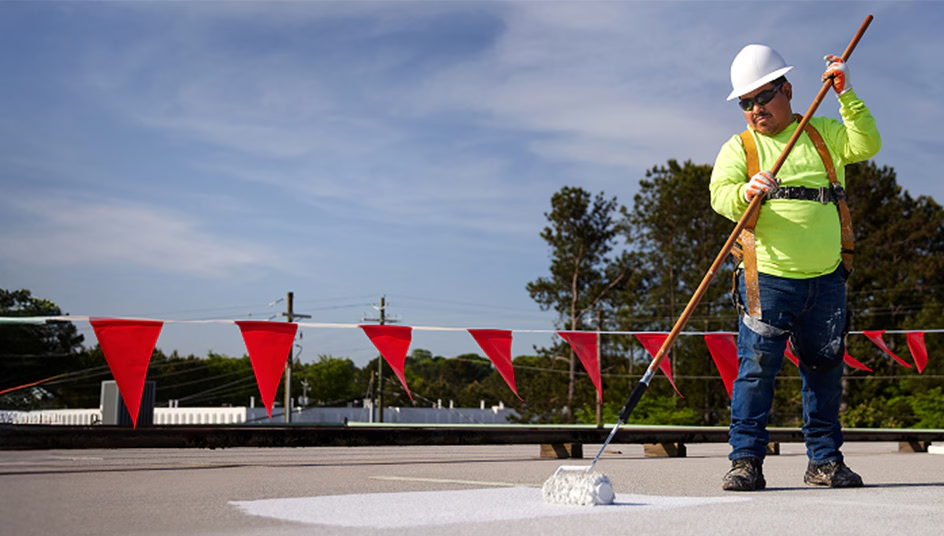
- Aging TPO and EPDM membrane roofs in serviceable condition
- Modified bitumen and built-up roofing systems with oxidized surfaces
- Metal roofs with panel seam leaks, rust, or failing fastener sealant
- Low-slope commercial roofs where restoration offers better near-term value than replacement
Frequently Asked Questions
A coating system, when properly applied over a prepared surface, creates a seamless, waterproof membrane that can resolve minor seam fatigue and surface-related leaks. However, it is not a substitute for repairs. Active leaks at flashings, penetrations, drains, or failed membrane sections must be correctly repaired before or as part of the coating scope. Applying a coating over an unrepaired leak source will not stop the leak — and may make it harder to find later.
Most commercial-grade coating systems carry manufacturer warranties ranging from 10 to 20 years depending on product, applied thickness, and substrate. Silicone systems are generally the most durable in ponding water conditions. Acrylic systems perform well in low-ponding environments with consistent maintenance. Service life is also affected by rooftop traffic, UV exposure, and whether the prep and application were done correctly. Recoating is often an option at the end of the warranty period, which can extend the program further without full removal.
The evaluation covers moisture condition of the substrate, seam and flashing integrity, drainage performance, membrane adhesion, and overall system condition. We use moisture scanning and core sampling on projects where subsurface condition is uncertain. A roof that passes that evaluation — dry substrate, manageable detail repairs, no systemic failures — is a reasonable coating candidate. A roof that doesn’t pass is better served by a different recommendation.
The installed cost of a coating system is typically lower than full membrane replacement, often significantly so when tear-off, insulation replacement, and new membrane costs are factored in. But cost comparison only makes sense when the roof is actually a good candidate. A coating on the wrong roof — one with wet insulation, systemic failures, or a substrate that can’t support adhesion — is money spent on a temporary fix that delays an unavoidable replacement while allowing interior damage to continue.
No. Roofs with moisture-saturated insulation, widespread membrane failure, unresolved drainage problems, or structural issues are not appropriate coating candidates. A thorough inspection is the only reliable way to determine whether coating is viable on a specific roof. We do not recommend coating projects where the underlying conditions make a dependable outcome unlikely.
Many commercial coating systems are available with manufacturer-backed warranties when installed by approved contractors using specified products and application rates. Warranty terms vary by manufacturer and product line. We work with coating systems where warranty coverage is an option and can walk through what’s required to qualify a specific project.