Metal Roofing Contractor in Colorado
Metal roof repair, replacement, restoration, and inspections for commercial properties across Colorado.
You're in the Right Place
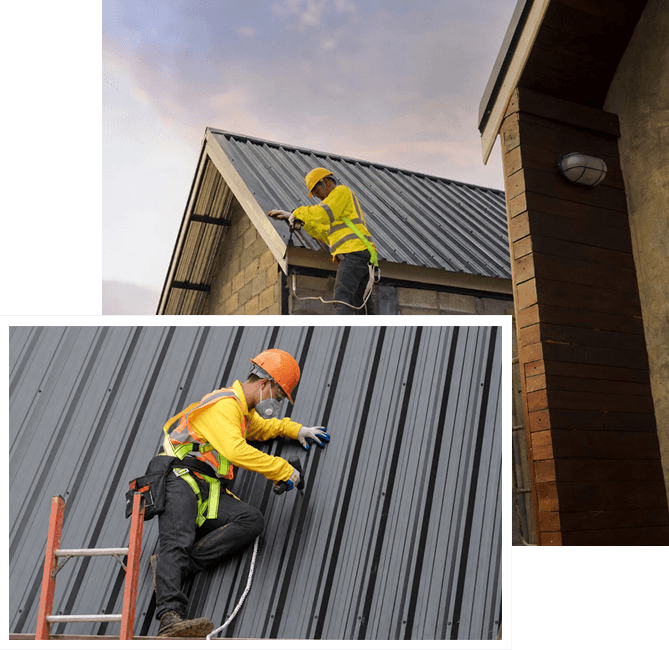
If you manage or own a commercial or industrial property in Colorado and you’re evaluating metal roofing for a new installation or replacement project — Statewide Roofing has the experience to help you make the right call.
We install metal roofing systems on commercial and industrial buildings across the Front Range. We work with property owners and facility managers who want a roofing system built to last, and we bring a full-system approach to every project — panels, attachment, flashings, trim, penetrations, and drainage all planned and executed correctly from the start.
If your existing metal roof has reached the end of its useful life, or you’re building new and evaluating metal as your system of choice — we’ll give you a straight assessment and a clear path forward.
What Is Commercial Metal Roofing?
Commercial metal roofing encompasses a range of panel systems, substrates, and attachment methods designed for sloped and low-slope applications on commercial, industrial, and institutional buildings. Understanding the differences between system types matters — panel profile, attachment method, and substrate all determine how the roof performs, how it ages, and what its realistic service life looks like.
Standing seam metal roofing
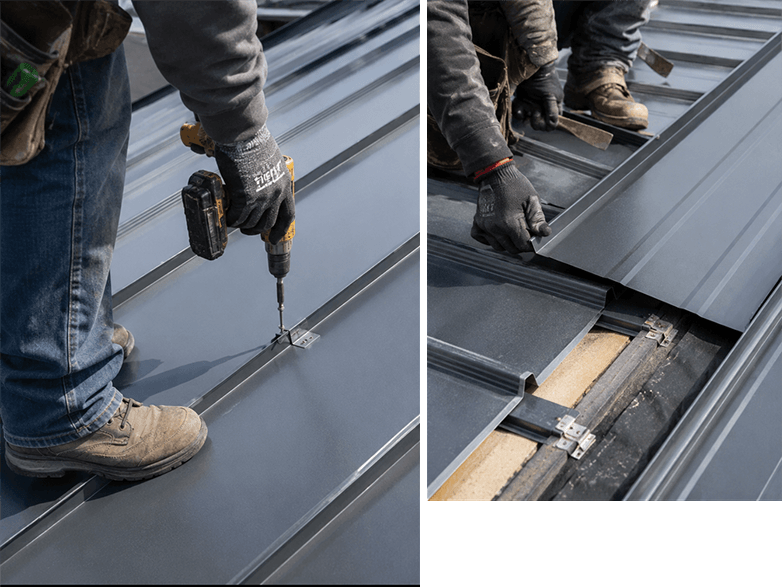
Standing seam metal roofing is the premium end of the commercial metal spectrum. Panels interlock at raised seams that run vertically up the roof slope, and the system is attached to the structure using concealed clips rather than exposed fasteners through the panel face. This concealed fastener approach eliminates the most common leak point on metal roofs — the fastener penetration — and allows the panels to move freely with thermal expansion and contraction. Standing seam systems are available in steel, aluminum, copper, and zinc, and are commonly specified on buildings where long service life, clean aesthetics, and minimal long-term maintenance are priorities.
Exposed fastener panel systems
Exposed fastener panel systems — including R-panel, corrugated, and trapezoidal profiles — are attached with fasteners driven through the panel face and sealed with neoprene or EPDM washers. These systems are cost-effective, widely used on industrial and agricultural buildings, and straightforward to install. On new construction and replacement projects where budget is a primary driver and the building use is compatible with the system's maintenance demands, exposed fastener panels offer solid performance at significantly lower upfront cost than standing seam.
Structural vs. architectural panels
Structural vs. architectural panels differ in whether the metal panel itself carries structural load or sits over a solid substrate. Structural panels like R-panel can span between purlins without a deck beneath them. Architectural standing seam panels typically require a solid substrate. This distinction affects system selection, design requirements, and installed cost.
Substrate materials
Substrate materials include Galvalume steel — an aluminum-zinc alloy coating that provides excellent corrosion resistance and is the dominant commercial metal roofing substrate — as well as galvanized steel, aluminum, and specialty metals. Panel gauge, coating type, and finish quality all affect long-term durability and warranty coverage.
Why Metal Roofing Is a Strong Long-Term Investment
Metal roofing’s longevity in commercial and industrial construction is earned. A well-designed and properly installed metal roof is one of the most durable assemblies available — standing seam systems in particular routinely achieve 40- to 60-year service lives in commercial applications. That longevity, combined with relatively low maintenance demands on concealed fastener systems, makes metal roofing a compelling long-term value proposition on buildings where the initial investment can be amortized over decades.
Metal roofing also performs exceptionally well in Colorado’s climate. The combination of high UV exposure, significant temperature swings, heavy snow loads, and periodic hail events puts real stress on roofing systems. Metal panels handle snow shedding effectively on appropriately sloped roofs. Galvalume and painted steel substrates resist the UV degradation that affects membrane systems. Standing seam systems accommodate the thermal cycling that Colorado’s daily temperature swings demand without creating recurring leak points, because concealed clips — not fastener penetrations — carry the attachment load.
The slope options available with metal roofing also expand design possibilities for buildings that aren’t suited to low-slope membrane systems. Many commercial buildings with architectural presence, visible roof sections, or significant snow loads are better served by a sloped metal system than by any flat roof alternative.
Standing Seam vs. Exposed Fastener — Which Is Right for the Building?
This is often the first real decision on a metal roofing project, and it deserves a direct answer.
Standing seam
Standing seam is the right choice when service life, leak minimization, and long-term maintenance reduction are the priorities. The higher upfront cost is real — standing seam systems are more material- and labor-intensive than exposed fastener alternatives — but the absence of exposed fastener penetrations eliminates the most common source of metal roof problems over time. On buildings where the roof will be in service for 30 to 50 years, the math typically favors standing seam.
Exposed fastener panels
Exposed fastener panels are the right choice when budget is the primary constraint and the building use is compatible with the maintenance demands the system requires. On industrial buildings, agricultural structures, utility facilities, and projects with defined shorter ownership horizons, exposed fastener systems offer solid performance at significantly lower cost. The key is going in with clear expectations about the fastener and sealant maintenance the system will need over its life.
We evaluate building use, budget, slope, structural configuration, and long-term ownership goals before making a system recommendation. There is no universal right answer — only the right answer for the specific building.
What Good Metal Roof Installation Actually Requires
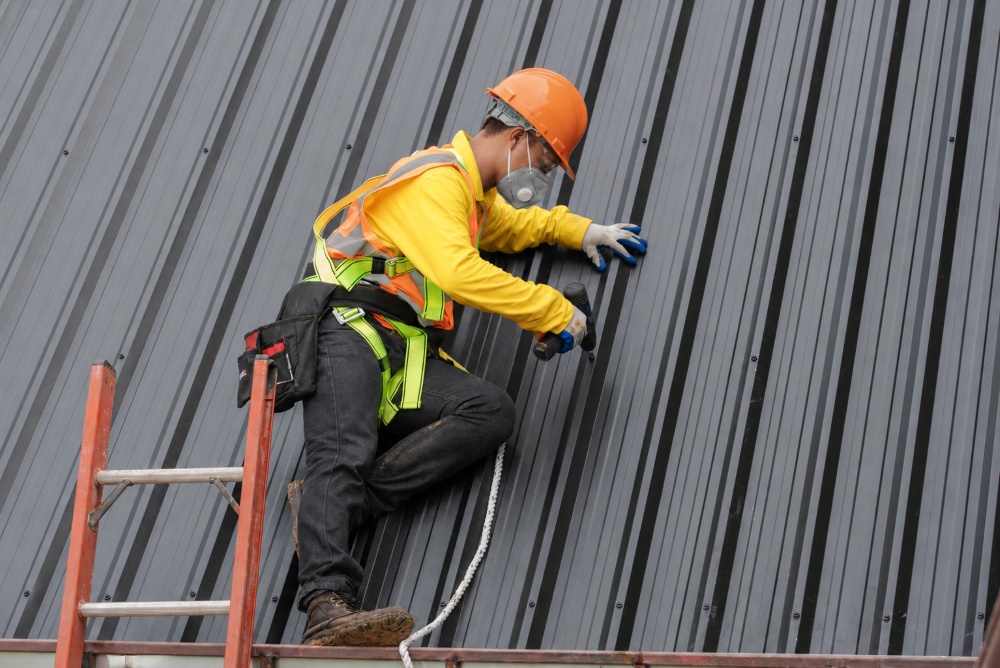
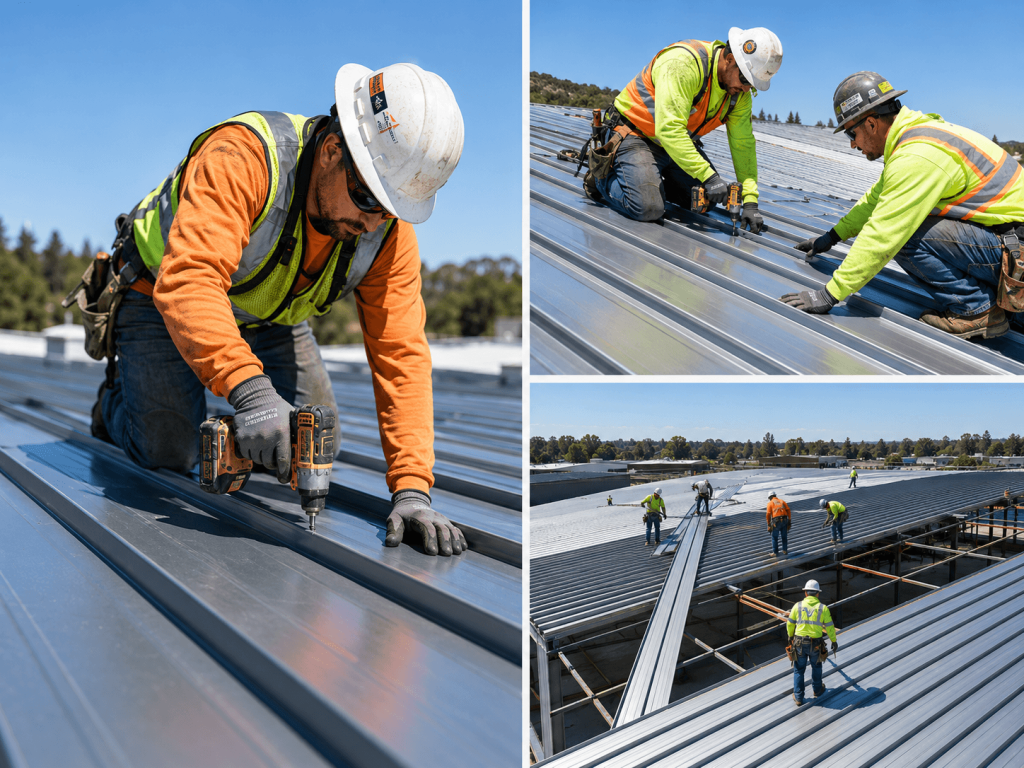
Metal roofing performs best when every component of the assembly is designed and executed correctly. The panels are the visible part. The details are what determine whether the roof holds up.
Flashing and trim details
Flashing and trim details at ridges, rakes, eaves, walls, penetrations, and transitions must be designed for thermal movement, properly fabricated, and installed with compatible sealants and fastening methods. These are the locations where most metal roof failures originate — not in the panel field. Getting them right on a new installation is far more cost-effective than correcting them later.
Fastener specification and installation
Fastener specification and installation on exposed fastener systems requires correct fastener type and length for the substrate, consistent torque to compress the washer seal without overdrive, and correct spacing per the panel manufacturer's requirements. Overdriven, underdriven, or wrong-diameter fasteners all compromise the seal that keeps water out over time.
Clip specification on standing seam systems
Clip specification on standing seam systems must account for panel width, material, anticipated thermal movement range, and wind uplift requirements. Clips that don't allow adequate float create stress at panel seams over time. This is a design detail that matters on day one and shows up in performance years later.
Penetration detailing
Penetration detailing — at HVAC curbs, pipe boots, skylights, conduit, and any other roof penetration — requires compatible flashing materials, correct integration with panel geometry, and sealant products designed for metal roofing applications. Penetrations are among the highest-risk locations on any roof, and getting them right during installation eliminates a whole category of future problems.
Drainage planning
Drainage planning ensures that panel layout, slope direction, valley design, and gutter or scupper sizing move water off the roof efficiently without creating ponding conditions at low points or transitions.
When Metal Roof Replacement Makes Sense
Statewide Roofing focuses on metal roofing replacement — not repair or restoration of existing systems. When a metal roof has reached the point where replacement is the right call, we’re the contractor to handle it.
The indicators that replacement is the appropriate path include advanced panel corrosion, widespread fastener and attachment failure, systemic leaking across multiple detail and field locations, panel damage from hail or impact events, or a roof that has simply reached the end of its practical service life. On many buildings, the decision is straightforward: the cost and disruption of continued maintenance on an aging system no longer makes financial sense relative to a new roof with a full service life ahead of it.
On some replacement projects, a structural overlay — new metal panels installed over the existing system — is a viable alternative to full tear-off when the existing framing and substrate condition support it. We evaluate that option where it applies.
Where Metal Roofing Is Commonly Specified
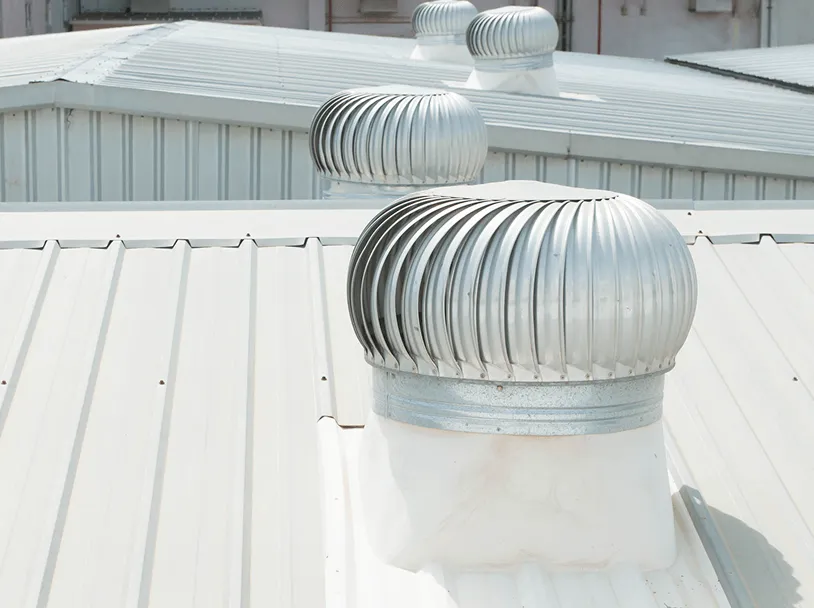
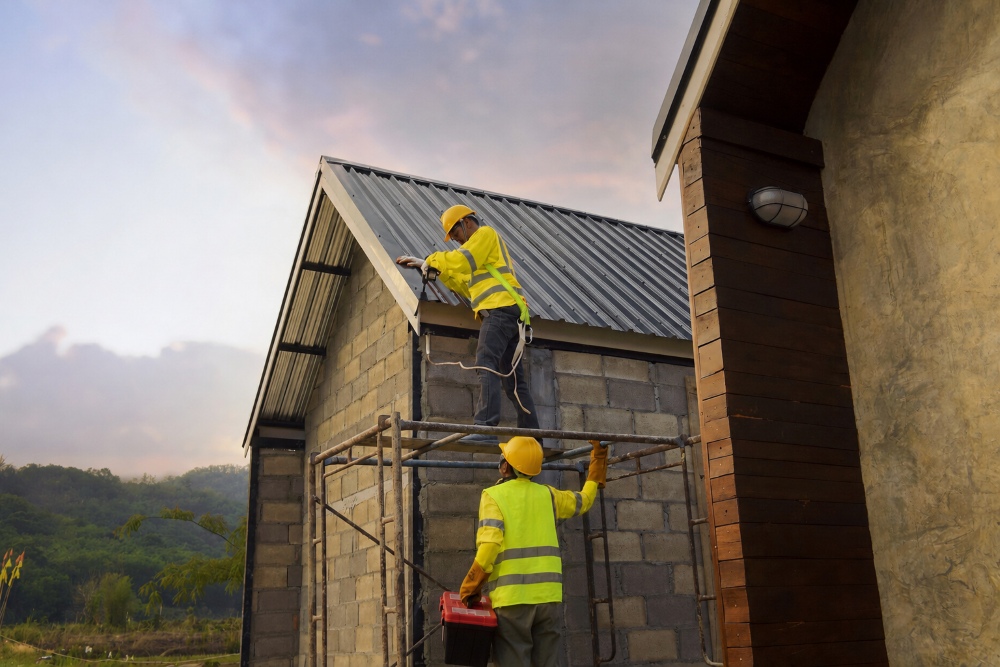
- Industrial facilities and manufacturing buildings
- Warehouses and distribution centers
- Agricultural and utility structures
- Office and retail buildings with sloped roof sections or architectural metal elements
- Institutional and educational facilities
- Buildings where slope, long service life, and a finished appearance are priorities
Frequently Asked Questions
Standing seam panels interlock at raised seams and attach to the structure with concealed clips — no fasteners penetrate the panel face. This eliminates the most common metal roof leak point and allows panels to move freely with thermal expansion and contraction. Exposed fastener systems use screws driven through the panel face, sealed with neoprene washers. They cost significantly less to install but require ongoing attention to fastener and washer condition over time. For most commercial buildings where long service life and minimal maintenance are the priorities, standing seam is the stronger long-term investment.
Yes, particularly for buildings with sloped roofs, significant snow loads, or where long service life and low long-term maintenance are priorities. Colorado’s climate — high UV, significant temperature swings, heavy snow, and periodic hail — suits metal roofing well. Galvalume steel panels resist UV degradation effectively, standing seam systems handle thermal cycling without creating recurring fastener leak points, and sloped metal roofs shed snow loads that would stress flat roof assemblies.
The indicators that replacement is the right path include advanced panel corrosion, widespread fastener or attachment failure, systemic leaking across multiple locations, significant hail or impact damage, or a roof that has simply reached the end of its practical service life. At that point, continued repair investment rarely makes financial sense relative to a new system with a full service life and warranty ahead of it.
Standing seam systems on commercial buildings routinely achieve 40 to 60 years of service life. Exposed fastener systems typically perform for 20 to 40 years depending on maintenance history, substrate quality, and climate exposure. In both cases, the quality of the original installation — panels, fasteners, flashings, penetrations, and trim — is the single biggest determinant of where a roof lands within that range.
Yes. Most commercial metal roofing systems carry manufacturer warranties covering both the panel substrate and the finish coating, with terms varying by manufacturer, panel type, and product tier. Substrate warranties on Galvalume steel panels commonly run 20 to 40 years. Paint and finish warranties typically cover chalk and fade performance over 30 to 40 years. Installation workmanship warranties are separate and provided by the contractor. We can walk through the specific warranty options available for the system being specified on your project.